
Solar vs diesel water pumping: the real costs
Most solar pumping systems we ship do not electrify a new site: they replace a diesel engine that has been drinking money for years. The comparison deserves honest numbers on both sides, because solar wins on operating cost but the diesel genset still has a role to play. Here is how professional buyers run the maths.
Where the diesel money goes
The pump itself is the cheapest part of a diesel pumping installation. The real budget lives elsewhere:
- Fuel, bought at a price you do not control, consumed every single pumping hour.
- Fuel logistics: on remote sites, transporting the fuel can cost as much as the fuel itself.
- Maintenance: oil, filters, injectors, belts, and the mechanic's travel time.
- Attendance: someone has to start, refuel and watch the engine.
- Downtime: a genset that will not start means a field or a herd without water that day.
What solar changes
A solar pumping system removes the energy line from the budget entirely. Once the array is up, every cubic metre is pumped at zero marginal cost, and maintenance shrinks to keeping the panels clean and the periodic checks any pump deserves. The power source is static: no pistons, no oil, no starter battery. The equipment is also long-lived: quality solar pumps are built with stainless steel hydraulics and permanent-magnet motors precisely because they are expected to run unattended for years.
Known cost items, predictable budgets
With no energy purchases, the lifetime cost of a solar pumping system is essentially known on day one. This predictability is why NGOs, utilities and commercial farms standardise on it, and why the payback is surprisingly short even for large systems.
The honest limits of solar
A solar pump delivers nothing at night and less under heavy clouds. Well-designed systems answer this with storage and hybridisation rather than oversizing:
- An elevated tank holding one to three days of demand supplies taps, troughs and drip lines by gravity whatever the weather.
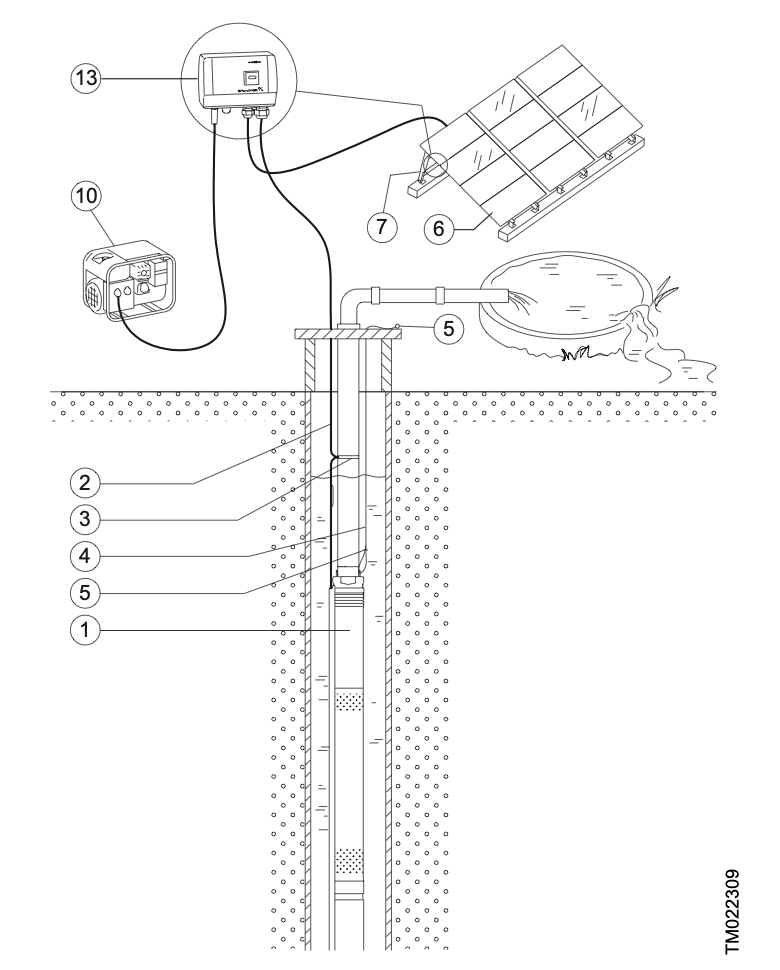
- A changeover switch box keeps the old generator as a backup: in Grundfos SQFlex systems, the IO 101 hands the pump to the genset when you start it, and back to the sun when you stop it.
- AC/DC compatible drives accept mains power where a grid eventually arrives, protecting the investment.
Migrating an existing diesel borehole
You rarely start from zero. Two migration paths cover most cases:
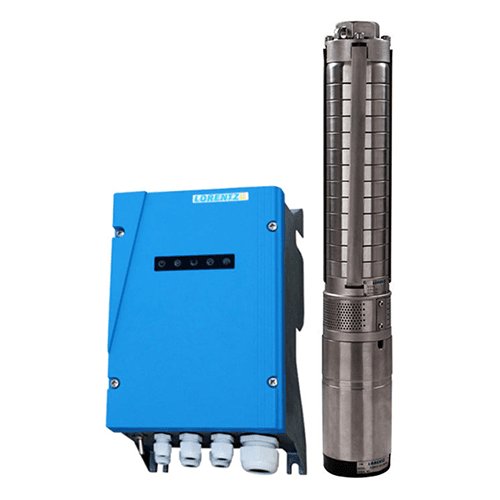
- Small and medium boreholes: replace the pump end with a solar unit with integrated electronics, such as the Grundfos SQFlex or a LORENTZ PS2 system, and keep the genset on the changeover box.
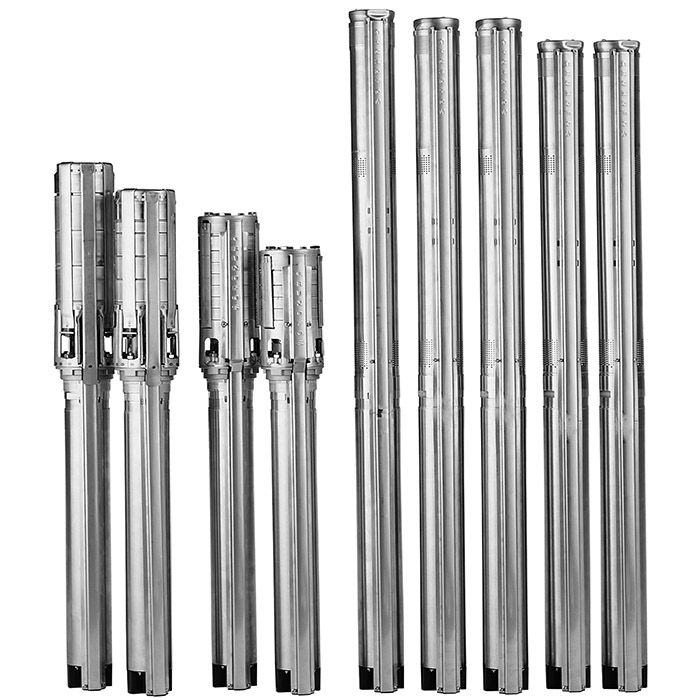
- High-yield boreholes: keep a standard three-phase Grundfos SP down the well and feed it from a Grundfos RSI solar inverter (1.5 to 250 kW) or an ABB ACQ80. The genset or the grid stays available as the alternate source.
In both cases the borehole, the pipework and the tank are reused. The diesel bill is what disappears.
Running the payback for your site
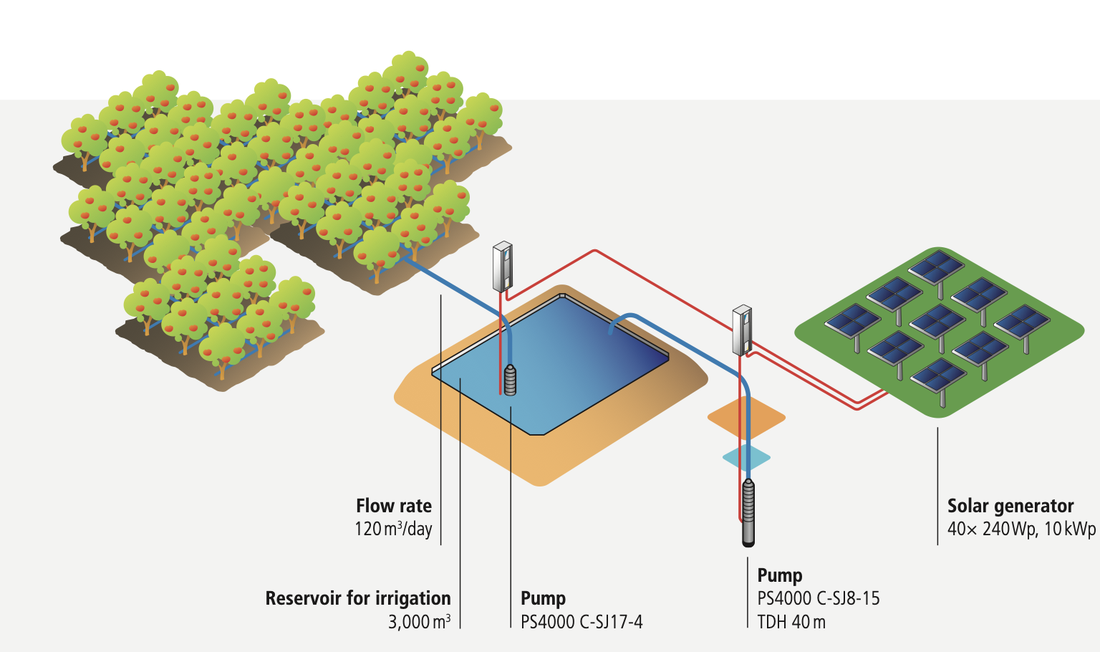
The payback period depends on exactly three local facts: how many hours a day you pump, what a litre of delivered fuel really costs you, and how far the mechanic travels. Sites that pump daily for irrigation or livestock recover the solar investment fastest; occasional-use installations keep diesel longer. Send us your consumption and we will run the comparison with real equipment prices, not brochure assumptions. As a documented reference, the Moroccan orchard system pictured above (10 kWp, 120 m³ per day, two pumps) reached return on investment in 4.5 years.
Reference equipment
 Grundfos SQFlex
Drop-in solar replacement for small diesel boreholes
Grundfos SQFlex
Drop-in solar replacement for small diesel boreholes
 Grundfos RSI
Solarise an existing SP or CR pump, 1.5 to 250 kW
Grundfos RSI
Solarise an existing SP or CR pump, 1.5 to 250 kW
 LORENTZ PS2
Solar pump systems for boreholes, ponds and rivers
LORENTZ PS2
Solar pump systems for boreholes, ponds and rivers
Frequently asked questions
How fast does a solar pumping system pay for itself?
It depends on your pumping hours and your real fuel cost including transport. Daily-use systems replacing diesel typically recover the investment within a few years, and documented paybacks are short even for large installations. We run the calculation for your site on request.
Can I keep my generator after switching to solar?
Yes, and you should. A changeover switch box such as the Grundfos IO 101 lets the generator take over during long overcast periods or exceptional demand, automatically returning to solar afterwards. The genset becomes an insurance policy instead of a daily expense.
Does solar pumping work in the rainy season?
Output drops under clouds but does not stop, and demand usually drops too when it rains. The storage tank bridges normal overcast days; the hybrid changeover covers exceptional weeks. Sizing on the worst month you actually irrigate keeps the system honest.
Can I solarise my existing borehole pump?
Often yes. Standard three-phase submersibles such as the Grundfos SP accept a solar pump inverter like the RSI, keeping the pump, pipework and tank in place. Send us the motor nameplate and the borehole data and we will confirm the match.
Get the numbers for your site
Tell us what you pump today and with what fuel bill. We return the solar or hybrid alternative, sized, priced wholesale, with the payback estimate.
Launch LE LAB Free sizing study